What we read this week: June 21
“With Zero Words, Levi’s Turned a Tricky FIFA World Cup Rule Into a Viral Brand Moment” (Inc.)
FIFA’s “clean stadium” policy forced Levi’s to cover the branding at Levi’s Stadium, but the white tarp’s batwing silhouette stayed instantly recognizable.
Levi’s leaned into the restriction rather than fighting it, posting the covered logo to Instagram with a self-deprecating caption that drew over 700,000 likes and 9 million TikTok views in under 24 hours.
The campaign cost nothing to produce yet outperformed paid sponsorship visibility, proving that a strong enough visual identity can communicate without a single word.
For brands without big-budget access, this is a reminder to watch for moments where a competitor, regulation, or cultural event accidentally hands you a platform, speed and wit matter more than spend.
“The World Cup Reminds Us That the Way to a Visitor’s Heart Is Through Their Stomach” (NPR)
With World Cup matches spread across cities in the South and beyond, international fans are discovering regional American chains like Waffle House, Buc-ee’s, and Wawa for the first time, often documenting the experience on social media.
A Japanese sports journalist’s photo of a Southern meat-and-three plate drew an outpouring of local recommendations and offers to cook for him, illustrating genuine grassroots hospitality beyond the stadiums.
Visitors in Boston and Texas echoed the same theme: warm, welcoming interactions with everyday Americans are shaping their impression of the country as much as the matches themselves.
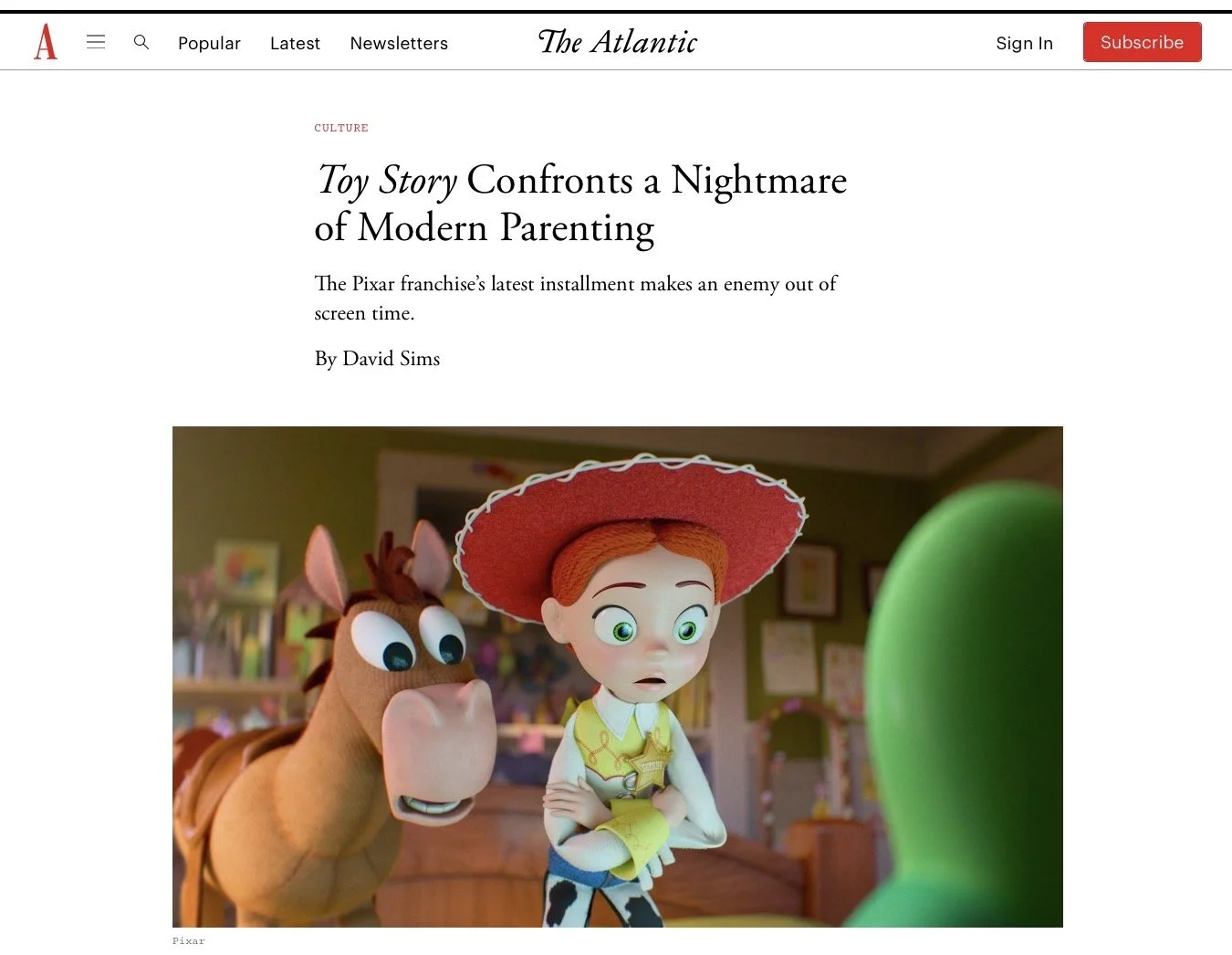
“Toy Story Confronts a Nightmare of Modern Parenting” (The Atlantic)
Toy Story 5 introduces a sentient tablet computer as its new antagonist, a device designed to pull kids toward addictive games and social networks rather than imaginative play.
Director Andrew Stanton uses the franchise’s long-running theme of toys fearing obsolescence to dramatize a very current parenting anxiety: children growing up too fast because of screen time.
The film continues Pixar’s pattern of using anthropomorphized objects to guilt-trip audiences into reflecting on how they treat the people and things around them, this time applied to tech habits rather than physical neglect.
This points to a strong cultural appetite right now for messaging around unplugging and imaginative, screen-free play.
“What If It All Came Out?” (New York Magazine)
A Disney employee’s identity, finances, and personal life were compromised after a hacker gained access to a company Slack channel, beginning with what looked like a routine phishing email he initially dismissed.
The breach exposed how thoroughly personal data and corporate access blur together for remote and hybrid workers, turning a single compromised login into leverage over someone’s entire digital footprint.
The piece frames this as a universal vulnerability: most people are sitting on an “archive of humiliation”, years of texts, searches, and photos, that could be exposed or weaponized with little warning.
“Fox to buy streaming pioneer Roku in a $22 billion deal”(AP News)
Fox Corp is acquiring Roku in a cash-and-stock deal valued at roughly $22 billion, giving Fox access to Roku’s 100+ million global households and its first-party viewer data.
The combined company will become the third-largest player in U.S. television by share of viewing, pairing Fox’s live sports and news strength with Roku’s streaming distribution.
Tubi and The Roku Channel will stay separate platforms rather than merge, since their audiences behave differently (Tubi skews on-demand, Roku Channel skews toward habitual, linear-style viewing)
“Frozen Yogurt Is Having a 2010 Revival”(Morning Brew)
Frozen yogurt servings sold rose 26% in the year leading up to March, ending what the industry had called the “froyopocalypse.”
The comeback is led by a new wave of premium shops with elevated ingredients and unconventional toppings, from Australian-style mango froyo to Mediterranean baklava crumble.
Legacy chains like 16 Handles are seeing renewed sales too, suggesting the resurgence isn’t just about new entrants but nostalgia pulling people back to familiar names.
This is a useful case study in category revival: a brand or format written off as dated can resurface as a status symbol when repositioned with better ingredients, design, and a nostalgia hook for the right generation.
Check out our latest blog post: “How Entertainment Brands Use Experiential Marketing to Create Buzz”, breaking down why the best entertainment brands create moments people can’t stop talking about.
Looking for 1:1 support on brand strategy & media outreach? Book a complimentary consultation with me here - I’d love to meet you!
Xo,
Julia, Che PR Founder