What we read this week: June 14
“Knicks Give Their City Something New: Impossible Joy” (The New York Times)
The Knicks ended a 53-year championship drought, delivering New York City a rare moment of uncomplicated, city-wide joy. A stark contrast to the tragedies that have historically been the city’s only true unifying events.
Celebrations were quintessentially New York: kick-lines to Sinatra in Broadway bike lanes, fans climbing stoplights and scaffolding, and strangers hugging so hard they went airborne, the city experienced maximally, as only New York can.
The championship felt personal: Jalen Brunson, underestimated and small by basketball standards, was shaped for this moment by his father, a former Knick and OG Anunoby’s game-winning tip-in in Game 4 already feels like a future statue.
The Knicks’ last title was in 1973, meaning the senior fans in the crowd were kids the last time this happened making the win as much about generational memory and identity as it was about basketball.
“Justice Department Approves Paramount’s Warner Bros. Discovery Takeover Without Any Strings Attached” (Variety)
The DOJ greenlit the $111 billion Paramount-WBD merger with zero conditions, combining CBS, Paramount+, and Paramount Pictures with HBO, Warner Bros., and CNN under one roof.
More than 5,500 industry figures including Florence Pugh, Pedro Pascal, and Robert De Niro signed an open letter opposing the deal, citing fears over job losses and reduced competition.
The merger still faces potential litigation from state AGs and ongoing regulatory reviews in the EU and UK.
Media consolidation at this scale will shrink editorial teams and shift content priorities. Brands and clients with entertainment or media coverage goals will be tracking how outlet structures and pitch contacts change post-merger.
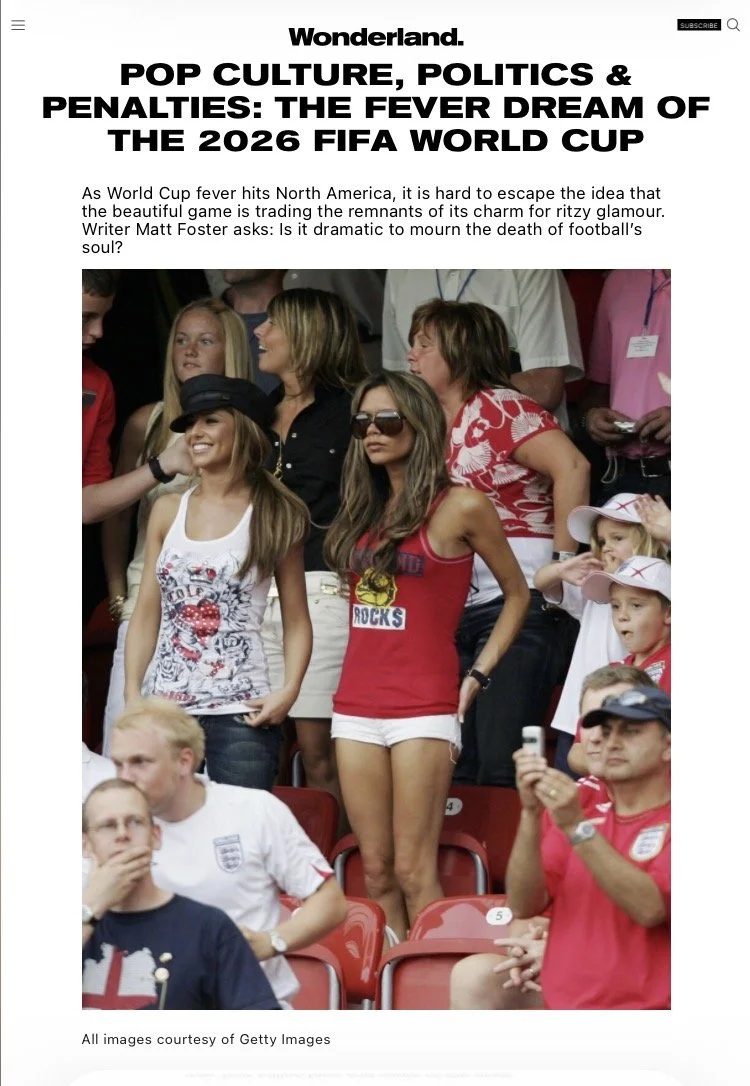
“Pop Culture, Politics & Penalties: The Fever Dream of the 2026 FIFA World Cup” (Wonderland)
The World Cup’s opening ceremonies spanned three host nations, featuring artists from Tyla and J Balvin to Lisa from Blackpink and Future cementing sport as a full-blown entertainment tentpole.
Luxury fashion is fully embedded in the tournament, from Loewe designing Spain’s travel suits to Jules Kounde collaborating with Jacquemus on Nike warm-up gear.
Average resale ticket prices hover near $600, with FIFA taking a 15% cut on both initial and resale purchases. Shifting the stadium experience toward influencers and corporate guests over everyday fans.
The World Cup’s intersection of fashion, music, and global culture makes it a rare tent-pole moment where lifestyle and entertainment brands can insert themselves into the conversation without a direct sports tie.
“Are Short Films the Future of Cinema?” (Dazed)
A new streaming platform called Rover has launched as a curated home for short film culture, offering audiences access to screenplays, technical breakdowns, and director commentary alongside the films themselves.
Issa Rae’s microdrama Screen Time pulled nearly 75 million views in its first week, becoming the top-performing vertical series on PineDrama and TikTok to date.
Filmmakers largely agree shorts won’t replace features, but they’re becoming a legitimate creative and cultural entry point especially in horror and genre film.
As short-form storytelling earns its own cultural credibility, entertainment brands have an opening to invest in the format not just as content marketing, but as a genuine brand expression with festival and platform reach.
“‘Love Island’ Melanie Moreno Creates a Debate About Weight” (WWD)
After footage of Love Island contestant Melanie Moreno’s prior plus-size modeling work surfaced, social media speculation about Ozempic use sparked a broader conversation about body representation and public scrutiny.
Researcher Amanda Czerniawski points to a documented pattern called “Celebrity Wasting Syndrome,” in which public figures who gain visibility at a larger size lose weight as their careers grow, a trend that long predates Ozempic.
Photographer Lydia Hudgens highlights the contradiction: audiences demand body diversity in media, yet when someone with a history in a larger body enters the spotlight, that history becomes a target rather than a point of pride.
For wellness, fashion, and lifestyle brands, this moment is a reminder that representation commitments are held to account in real time and that authentic, consistent messaging matters more than a single campaign.
Check out our latest blog post: “How Entertainment Brands Use Experiential Marketing to Create Buzz”, breaking down why the best entertainment brands create moments people can’t stop talking about.
Looking for 1:1 support on brand strategy & media outreach? Book a complimentary consultation with me here - I’d love to meet you!
Xo,
Julia, Che PR Founder