What we read this week: October 25
Key Takeaways:
Madison Square Garden (MSG) sent Knicks employees an email offering complimentary New York Knicks championship rings and asked them to choose between two designs.
However, the email was a phishing test and employees who clicked the link were redirected to mandatory cybersecurity training rather than a ring selection page.
MSG said hackers had breached and extorted the organizations through a similar phishing scheme beforehand.
They acknowledged that using the emotionally significant championship ring as bait was an “unfortunate mistake” that could undermine employee trust and morale.
The organization said it would give more than 275 rings and pieces of jewelry to players, coaches, employees, and other members of the Knicks organization in recognition of their contributions.
“More Planned Riots Put Off Art, Fashion And Sport Events In Paris” (Vogue Business)
Key Takeaways:
Fear of riots and looting across European cities have forced organizers in Paris to cancel or shorten several cultural, fashion, beauty, and sporting events.
Art Basel Paris ended early, canceling its Saturday and Sunday sessions amid safety concerts and social media calls targeting the event.
Other cultural institutions and brands scaled back activities, announcing closures and cancellations.
Luxury retailers face uneven financial risks as prolonged unrest could hurt tourism and consumer spending, with smaller smaller independent boutiques especially vulnerable.
Resale platforms like Vinted and eBay are tightening security by strengthening monitoring and authentication measures to prevent stolen luxury goods from entering resale markets.
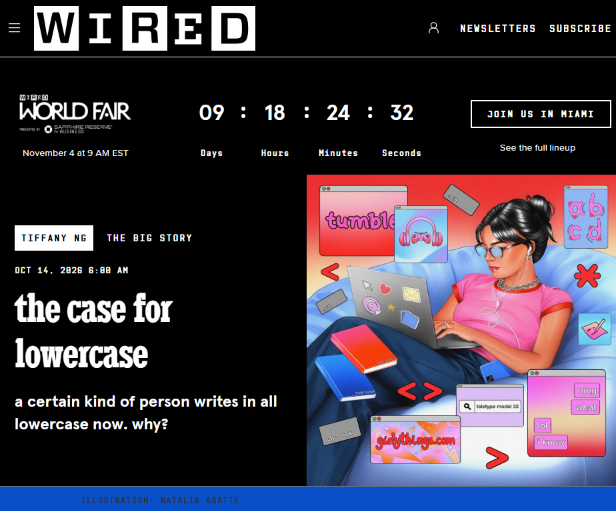
“The Case For Lowercase” (Wired)
Key Takeaways:
Many young women are increasingly using lowercase writing to make personal posts feel more intimate, casual, and less self-important.
This trend has roots in early internet culture, tracing back to early computing limitations and hacker communities that favored lowercase conventions.
Early 2010s Tumblr communities, blogs like justgirlythings, and poets such as Rupi Kaur helped establish lowercase as an expression of femininity and personal identity.
Although some users see it as feminine and authentic, it has a long history in male-dominated online communities, showing that the style belongs to no single group.
Lower case can be a strategic communication tool and companies have found that lowercase email subject lines may generate more opens.
From signaling rebellion and artistic expression, to helping people appear less like AI-generated content, lowercase demonstrates how a simple writing choice can acquire new meanings as internet culture changes.
“Apple Is Embracing Creators For Its ‘Pro And Tell’ Event. And It’s Not Alone.” (Mashable)
Key Takeaways:
Apple is shifting its marketing strategy and increasingly inviting social media influencers and creators to exclusive tech events rather than relying solely on traditional journalists.
Paid travel, upscale accommodations, and exclusive access to executives help make these events attractive to creators and generate attention online.
Creators can introduce Apple products to loyal followers through relatable, personality-driven content that traditional advertising may struggle to replicate.
Companies such as Samsung and AI firms are also investing in creator partnerships and immersive brand experiences to promote products and services.
However, prioritizing influencers may reduce opportunities for independent reviewers to scrutinize products and ask difficult questions about their limitations.
Sponsored trips can generate substantial exposure, but brands risk damaging consumer trust when promotional content appears overly controlled or creators' independence is questioned.
“How Midcentury Modern Design Went From Cool To Cringey” (The Wall Street Journal)
Key Takeaways:
Midcentury modern rose to prominence after World War II, emphasizing functional furniture, clean lines, and modern living, becoming a symbol of postwar optimism.
During the 2010s, vintage furniture and popular culture, including Mad Men, helped make midcentury modern a defining look of stylish homes.
Its widespread adoption in homes, coffee shops, and short-term rentals made once-distinctive interiors feel repetitive and predictable.
As retailers mass-produced affordable replicas of iconic designs, it became harder to distinguish authentic vintage pieces from mass-market copies.
Now, demand for midcentury furniture is cooling and resale sellers and vintage dealers report waning interest, while some rental-property owners are refreshing interiors to move away from the oversaturated look.
Designers and homeowners are increasingly mixing furniture from different eras and styles instead of decorating an entire space around one aesthetic.
“Victoria’s Secret Straddles The Line Between Past And Present” (Business of Fashion)
Key Takeaways:
Victoria’s Secret is embracing its sexy heritage.
The brand is bringing back the glamour, iconic Angels, elaborate wings, and Fantasy Bra that made its fashion shows famous while modernizing its image.
The return of familiar supermodels and signature runway spectacles appeals to longtime fans who missed the brand’s original identity.
Victoria’s Secret is using social media, YouTube docuseries, creator-driven marketing, and live event access to connect with younger, digitally native consumers.
Inclusivity remains part of the evolution and the runway features a wider range of ages and body types, alongside established Angels and newer models, reflecting changing expectations around representation.
Victoria’s Secret is distinguishing Pink with playful, youthful styling that blends Gen Z trends with nostalgic references to its Millennial-era popularity.
The company is seeing encouraging sales growth and attracting new customers, but it must preserve its loyal fan base while evolving enough to remain culturally relevant.
Looking for 1:1 support on brand strategy & media outreach? Book a complimentary consultation with me here - I’d love to meet you!
Xo,
Julia, Che PR Founder