What we read this week: October 18
“Airfares Have Spiked. Is The Death Of Spirit Airlines To Blame?” (The New York Times)
Key Takeaways:
The shutdown of Spirit Airlines removed the major ultra-low-cost competitor and has put an upward pressure on fares.
Travelers are facing higher domestic ticket prices as airline operating expenses increase.
Higher fuel and labor costs are compounding the problem and budget-conscious travelers are hit the hardest.
Comparing airlines, adjusting travel dates, and considering alternative airports can help offset rising fairs.
Spirit Airlines’ exit shows how competition matters and their losing their low prices can weaken price competition across the wider domestic airline market.
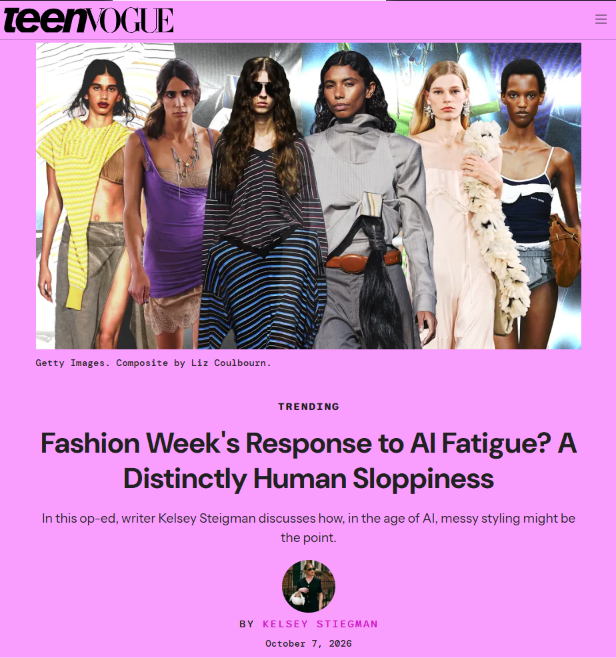
“Fashion Week’s Response to AI Fatigue? A Distinctly Human Sloppiness” (Teen Vogue)
Key Takeaways:
Fashion is embracing imperfection: Spring/Summer 2027 runways featured deliberately messy styling, including unbuttoned shirts, loose belts, and clothes worn backward.
Designers are pushing back against AI-generated perfect, overly polished aesthetics.
“Analog dressing” is emerging as a trend which celebrates spontaneous, imperfect styling that feels lived-in.
Getting dressed is both functional and artistic, shaped by real-life experiences that AI cannot personally experience.
Major labels like Altuzarra, Campillo, Prada, and more are incorporating unconventional proportions and disheveled styling in their collections
Fashion’s embrace of the unexpected is placing value in human creativity, individuality, and authenticity rather than algorithmic perfection.
“Being Interesting Is The New Social Currency” (The Strat Chat)
Key Takeaways:
As trends, products, and aesthetics become easier to copy, having a distinctive perspective and something meaningful to say is becoming a stronger status symbol.
Creators build deeper audience loyalty when they share opinions and personal journeys rather than giving product recommendations.
Intellectual curiosity is aspirational and reading widely, exploring art and film, developing niche interests are becoming new ways to signal taste and individuality.
Copying someone’s reading list or adopting niche hobbies is just another form of trend-following unless it leads to genuine curiosity and an original point of view.
The most compelling creators connect ideas and translate what they know into insights that make audiences think differently.
In the end, brands should sell a story and not a product to give audiences a reason to engage beyond the purchase itself.
“New York Poised To Overtake California As Top State For Movie And TV Production” (The Hollywood Reporter)
Key Takeaways:
New York is closing in on California’s entertainment industry with New York’s film and TV production spending surged 87% in the latest quarter, reaching $1.61 billion compared with California’s $1.76 billion.
California is still No. 1, but its lead is shrinking.
California’s production spending grew 17%, significantly slower than New York’s rapid expansion.
Expanded soundstage capacity and established production facilities are helping New York attract more major film and television projects.
Productions that shoot season after season in the same facilities provide more consistent work and make the state attractive to studios.
New York nearly matched California in the third quarter, making the next quarter and 2027 critical in determining whether it becomes the country’s top production hub.
“A PR Pro Says Kelly Clarkson Made One Big Mistake In Her Feud With A Brooklyn Toy Shop” (Business Insider)
Key Takeaways:
After feeling disrespected at Brooklyn novelty shop Art of Play, Kelly Clarkson publicly accused an employee of treating her as though she couldn’t afford an item, comparing the experience to Pretty Woman.
The dispute centered on a $15,000 mechanical bird that Clarkson wanted to buy, but the store said it was a permanent fixture and that the price referred to a similar bird available from its creator.
Art of Play challenged her, saying they offered her an alternative bird for $2,000 and claimed she left before hearing all the options, creating two competing narratives about the interaction.
PR consultant Evan Nierman argued that public controversies are often decided by which side tells the more compelling emotional story, rather than by who is technically right.
Clarkson’s large following triggered intense online attention and backlash against the shop, illustrating how a single celebrity post can threaten a small business’s reputation.
De-escalation would have been the smarter PR move, and a private conversation and a willingness to resolve a misunderstanding could have prevented a minor retail dispute from escalating into a public reputational crisis.
“The Flying Car Must Never Be Built” (The Atlantic)
Key Takeaways:
Elon Musk’s airborne Tesla Roadster is an impressive engineering spectacle, but brief aerial stunts don’t solve the real challenges of everyday transportation.
Flying cars symbolize freedom more than utility and the appeal of flying cars comes from the idea of escaping traffic and ordinary physical constraints rather than from a clear practical need.
Musk’s demonstration revives the promise of futuristic breakthroughs, but the article questions whether such eye-catching inventions meaningfully improve people’s lives.
From early flying-car experiments to later concepts, inventors have repeatedly struggled to make these vehicles safe, affordable, practical, and commercially viable.
The Roadster’s real achievement may be demonstrating technological audacity and realizing Musk’s personal vision rather than delivering a useful new way to travel.
Looking for 1:1 support on brand strategy & media outreach? Book a complimentary consultation with me here - I’d love to meet you!
Xo,
Julia, Che PR Founder