What we read this week: March 22
“David Protein Accused of Lying About Calories in Popular Bar” (Bloomberg)
Takeaways:
A lawsuit alleging David Protein bars underreport calories challenges the brand’s premium pricing model, which relies on perceived health value to justify higher costs.
The case highlights how consumers use nutritional claims as a key decision-making tool, especially in the competitive functional food market.
Disputes over calorie calculation methods show how regulatory gray areas can impact consumer trust and brand credibility.
The controversy reflects increasing demand for transparency as wellness-driven products command higher price points.
“Autumn Durald Arkapaw Makes History as First Woman to Win Best Cinematography” (The New York Times)
Takeaways:
Autumn Durald Arkapaw’s historic Oscar win, alongside being the first woman to shoot a feature for IMAX, signals a shift in how the film industry markets both technical innovation and diversity as commercial value.
The recognition highlights how representation in technical roles can influence audience perception and engagement with films.
Milestones like this increasingly influence brand partnerships, awards campaigns and consumer expectations around inclusivity in entertainment.
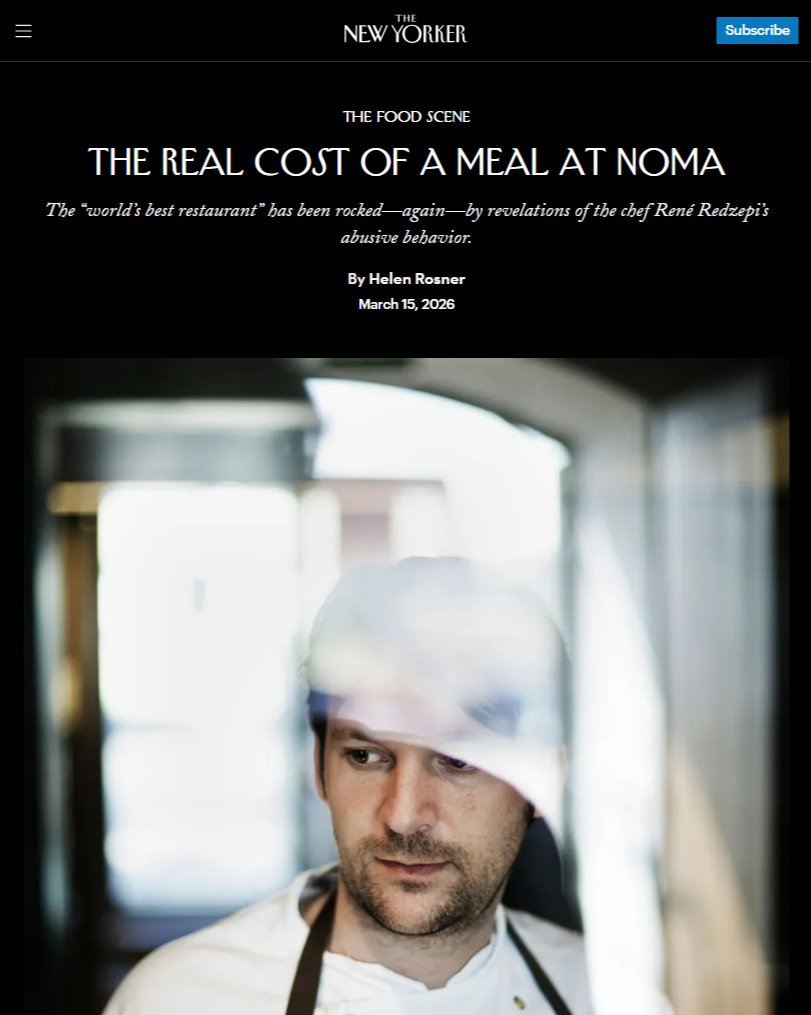
“The Real Cost of Meal At Noma” (The New Yorker)
Takeaways:
The article reveals that Noma’s high menu prices are supported by an unsustainable labor model, challenging the economics behind luxury dining experiences.
It underscores how consumers are beginning to question whether premium pricing reflects ethical labor practices or hidden operational costs.
The piece reframes fine dining as a business model struggling to balance innovation, exclusivity and financial viability.
Increased transparency around labor and cost structures is reshaping how consumers evaluate luxury food brands.
“An era-defining insight into the Chelsea Hotel's artistic community in 1970s New York” (Wallpaper)
Takeaways:
The Chelsea Hotel’s legacy as a creative hub is being repackaged into a cultural product, demonstrating how nostalgia can be monetized in media and tourism.
Archival storytelling transforms past artistic communities into marketable brand narratives that appeal to modern consumers seeking authenticity.
The continued fascination with the hotel highlights how place-based cultural history drives experiential consumption.
Creative legacy is increasingly leveraged as a commercial asset across publishing, hospitality and cultural branding.
Takeaways:
The use of AI to create a custom cancer vaccine for a dog reflects growing consumer willingness to invest in high-cost, personalized pet healthcare.
The story highlights the expansion of precision medicine into consumer-driven markets beyond human health.
Emotional attachment to pets is driving demand for advanced, tech-enabled solutions that were previously inaccessible.
Innovation narratives rooted in personal stories are increasingly effective in building consumer trust and interest in emerging technologies.
“Banksy’s Identity Has Been Revealed. Expect His Art to Sell for a Lot More” (The Wall Street Journal)
Takeaways:
The potential reveal of Banksy’s identity is expected to increase artwork prices by intensifying collector demand through renewed media attention.
The case demonstrates how scarcity, anonymity, and narrative function as core value drivers in the art market.
Collectors often treat cultural moments like identity reveals as catalysts for investment and resale opportunities.
The situation highlights how storytelling and mystique can directly translate into higher consumer willingness to pay in luxury markets.
“Dinner and No Drinks: Restaurants Are Struggling as Americans Drink Less” (The New York Times)
Takeaways:
A 2025 Gallup poll found only 54% of respondents drink alcohol, a new low. Those who do drink are consuming less overall.
When given a non-alcoholic option, many guests who previously declined drinks actually said yes. This suggests they wanted an experience, just not alcohol.
Non-alcoholic menus are a growing necessity, but not a financial fix. NA cocktails require the same labor without commanding the same price, creating a margin problem.
The Millennial generation — the craft cocktail & shot-and-beer cohort — is aging out of peak drinking years, and Gen Z is not replacing them in bars and restaurants.
Following the media outlets you want to be featured in helps you understand what their contacts are looking for. And the best part? This is something anyone can do without hiring professional support.
Subscribe to our Che PR newsletter below & follow us on Instagram if you want to receive more tips like these directly to your inbox or social media feed.