What we read this week: September 13
“Should Brands Be Patrons of Art and Culture?” (Vogue)
Key Takeaways:
Brands are shifting from “using culture” to supporting culture and instead of inserting themselves, brands are increasingly funding artists, creators, institutions, and communities: becoming patrons.
True patronage is a long-term support of creative work without demanding an immediate commercial payoff and giving up control by letting artists and creators retain their own voices.
Usually the payoff is often indirect: investing in artists builds cultural credibility, trust, and strengthens brands in ways not directly tied to sales.
Supporting culture can fund emerging talent by providing platforms, opening doors, offering mentorship.
By treating culture as valuable in itself, rather than just a marketing asset, brands fund the cultural ecosystem they depend on rather than owning the culture themselves, which may be more meaningful than celebrity partnerships.
“The 30 Most Beautiful Tennis Courts Around The World” (Architectural Digest)
Key Takeaways:
While there are many well known tennis facilities like the Centre Court at Wimbledon, there are many other beautiful tennis courts with some courts going above and beyond to create fully immersive spaces that elevates the playing experience.
The Domaine des Etangs in Massignac, France floats in an Auberge Resort pond next to an art-filled 14th-century château.
In the Maldives, the tennis court on the Jumeirah Olhahli Island offers a beautiful view of the Indian Ocean with the sea breeze to cool players off, mere yards away from the shoreline.
Set in the picturesque Swiss Alps, in Mürren, Switzerland, the locals enjoy tennis 5,400 feet above the Lauterbrunnen Valley.
In San Paolo Converso, US artist Asad Raza transformed a church into a functioning tennis court as a performance art installation.
Key Takeaways:
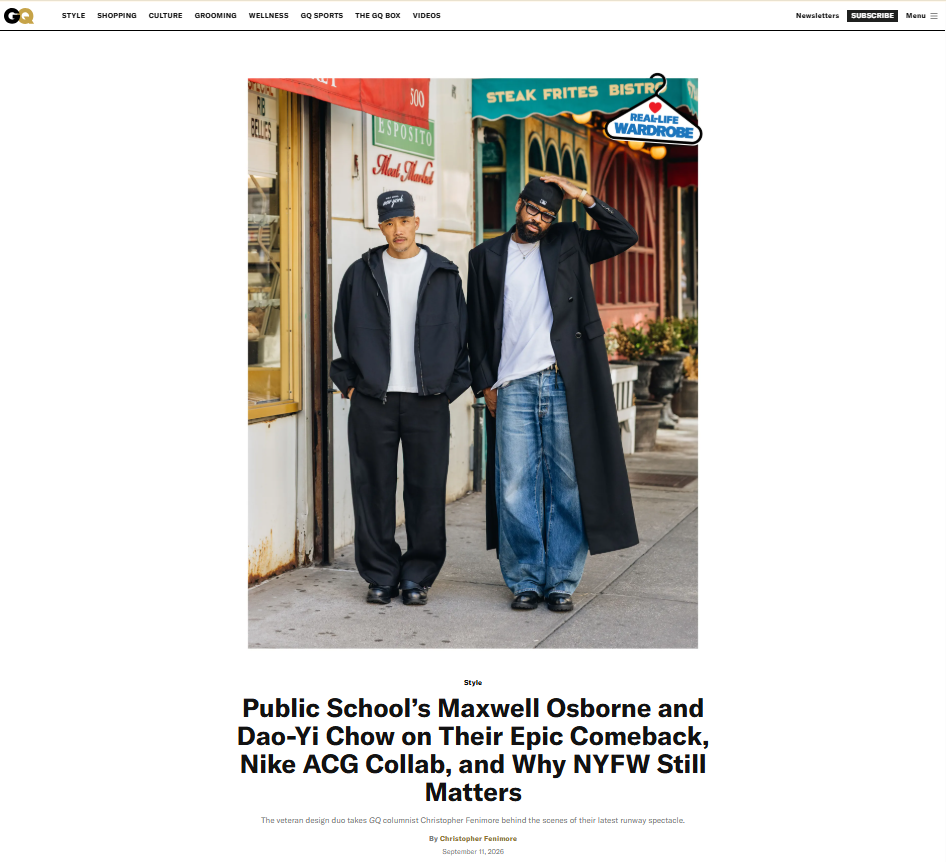
Cofounders of street wear clothing line Public School, Maxwell Osborne and Dao-Yi Chow took a six year hiatus after over a decade of designing, and now they are back.
Their brand and clothing are deeply rooted in their native New York City identity, referencing the city’s ever-changing landscape and constant collision of different cultures and influences.
Chow argues that menswear has become much more personal currently, with clothing as a way for men to express who they are: values, interest, and aspirations.
Their Spring 2027 collection “Living Proof” emphasizes the modern day need for practicality, with Osborne and Chow striving to create the “new uniform” of New York.
Functionality becomes a part of urban style as the collection was designed with modularity, adaptability, and protection from the elements in mind.
Their return to New York Fashion Week is more than selling clothes; they argue that runways are necessary to sustaining the fashion community and the act of people coming together, interacting, and experiencing the clothes collectively is extremely important in this digital age.
Key Takeaways:
To reach the Gen Z market, brands are now partnering with the popular #RushTok trend where college students document their journeys through sorority recruitment including out fit of the day posts and dance routines by the sorority sisters to attract new members.
Brands gift sororities with products for recruitment to build year-round ambassador programs for social media.
Companies like Sephora, Kohl’s, and Nike have set up campus pop-ups or sponsor recruitment events to expand past product placement and build long-term brand loyalty.
Prebiotic soda company, Poppi, has been the leader of the pack: they have fully integrated its product into sorority life through unique themes and customized cans, reaching active members, rushing college students, alumni, and invested fans.
Poppi is focussed on authentically integrating itself and elevating student’s college experience - recently they sent Love Island cast members Aniya Harvey and Carl Schmidt to Work Weeks and Bid Days and partnered with over 20 chapters for a “Poppi-fied experience during recruitment”
By sending over 28,000 pieces of customized merch and custom branded coolers and fridges, they intend to become a staple in sorority houses, ingrained in college life, and are actively creating meaningful relationships and immersive experiences that will be remembered.
“Romance Is Thriving Because Dating Is Dead ” (Instyle)
Key Takeaways:
Romance book sales have surged since 2021, with a 24% increase in the most recent year, and romance adaptations are dominating TV and streaming, yet younger people are increasingly frustrated with dating, dating apps and marriage.
People aren’t losing their desire for love - they’re losing faith in the process of finding it.
Romance fiction lets people enjoy the emotional payoff of intimacy without having to navigate the exhausting uncertainty of modern dating.
Male leads are often characters who communicate, respect boundaries, and have emotional intelligence, creating a cultural archetype of the “man written by a woman”.
Consuming fiction may also help people articulate what they actually want from relationships.
Romance provides a comfortable escape from the unstable reality; political uncertainty, loneliness, economic stress, and general pessimism.
“Pistachios, Truffles and Olives: Across Italy, A Cornucopia of Fall Food Festivals” (New York Times)
Key Takeaways:
Fall is one of Italy’s best seasons for food-focused travel, with a plentiful harvest that brings festivals, or sagre, centered around truffles, grapes, olives, mushrooms, wine, and other seasonal ingredients.
Rather than polished culinary tourism, sagre are intentionally local and communal where visitors can eat regional specialties alongside residents, and connect with agricultural traditions, history, and identity of a particular town or region.
Fall is the time to experience the freshest olive oil, wine, truffles, and more - those who attend are tasting ingredients at the moment they are harvested or produced.
A food festival can be the reason to visit smaller towns and rural areas, offering an alternative to Italy’s major tourist destinations.
Sagre are cultural preservation: they keep recipes, farming practices, and local traditions alive and fall is the perfect time to enjoy Italy’s rich landscape, agriculture, and food.
Looking for 1:1 support on brand strategy & media outreach? Book a complimentary consultation with me here - I’d love to meet you!
Xo,
Julia, Che PR Founder