What we read this week: August 2
“BTS Boycott the Grammys, But Will Other Artists Follow?” (Rolling Stone)
BTS declined to submit their album Arirang for 2027 Grammy consideration, a protest timed one month after the Recording Academy introduced a new Best Asian Pop Music Performance category.
The group deliberately responded in Korean rather than English, a choice widely read as a refusal to be filtered through a Western-defined, region-specific lane.
Critics, including K-pop scholars and translators, argue the category flattens a fifty-country continent into a single box, exposing the gap between award categories meant to signal inclusion and those that risk reading as tokenism.
This is a case study in how a calculated refusal, delivered in the artist’s own language and on their own terms, can generate more cultural authority and press than accepting the recognition would have.
#CheClient “DGA Supports Illinois’ 5% Sustainability Uplift for Film and Television Production” (DGA)
Illinois now offers productions an added 5% tax credit for certified “Green” status, stacking on its base 35% credit for a total of up to 40%.
The Fields Studios in Chicago was purpose-built with sustainability in mind and helped shape the legislation.
DGA is positioning this as a model it wants replicated in other states, alongside a push for a federal incentive.
Sustainability credentials are becoming a competitive differentiator in production decisions, not just a nice-to-have. Giving a timely and substantive story to tell about environmental commitments backed by policy rather than just messaging.
“HBO Max Dips Toe Into Vertical Video With ‘HBO Max Shorts’”(The Hollywood Reporter)
HBO Max is testing an AI-curated vertical video feed and a conversational search tool, both aimed at discovery rather than original content.
Clips are AI-selected using scene-level metadata, then verified by human editors before publishing.
The move mirrors Netflix and Disney, signaling that vertical, algorithm-driven discovery is becoming standard across streaming platforms, not a passing trend.
As major platforms train audiences to discover content through short, scroll-based clips, brand and talent storytelling increasingly needs to work in fifteen-second, vertical-first formats, even when the underlying content lives in long form.
“Are Influencers Barred From This Nantucket Shop?”(NYT)
A “No Influencers” sign at a Nantucket craft shop sparked national debate after owner John Sylvia said visitors were using the store as a backdrop without buying or engaging.
A Content creator, Paige Paul, publicly called the sign anti-feminist, escalating the story into a referendum on influencer culture and gender.
The controversy grew the shop’s Instagram following by roughly 8,000, showing backlash can still translate into visibility and business.
This provides a live example on how a single sign or comment can define public perception, and a business’s response (silence, humor, or doubling down) shapes whether controversy helps or hurts.
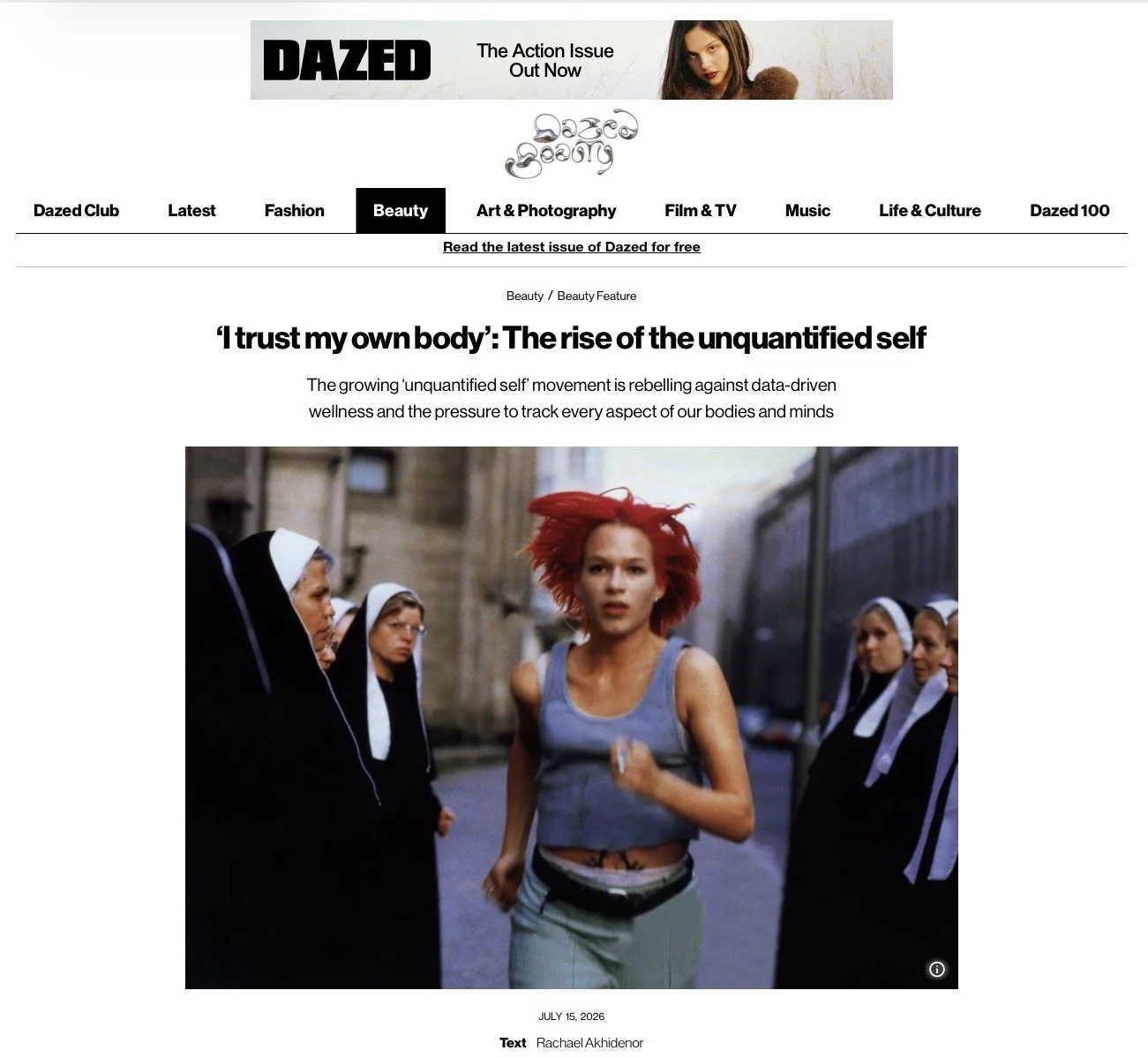
“‘I trust my own body’: The rise of the unquantified self ” (Dazed)
A growing wellness movement is rejecting data tracking (wearables, sleep scores, glucose monitors) in favor of intuition and feeling.
Search interest in “intuitive wellness” is up 2,021% globally over the past year, signaling this is measurable and accelerating, not fringe.
The movement has its own contradictions: “anti-optimisation” events and products still carry a premium price tag, and some warn it risks becoming its own performative trend.
Messaging built around data, metrics, and optimization may increasingly need to be balanced with language around intuition, ease, and feeling to avoid appearing tone-deaf to where consumer sentiment is heading.
Check out our latest blog post: 6 Factors to Consider When Determining Your Media Outreach Strategy, breaking down what brands need to weigh before pitching press so their outreach actually lands.
Looking for 1:1 support on brand strategy & media outreach? Book a complimentary consultation with me here - I’d love to meet you!
Xo,
Julia, Che PR Founder